🌿 The power of gesture in inner practice.
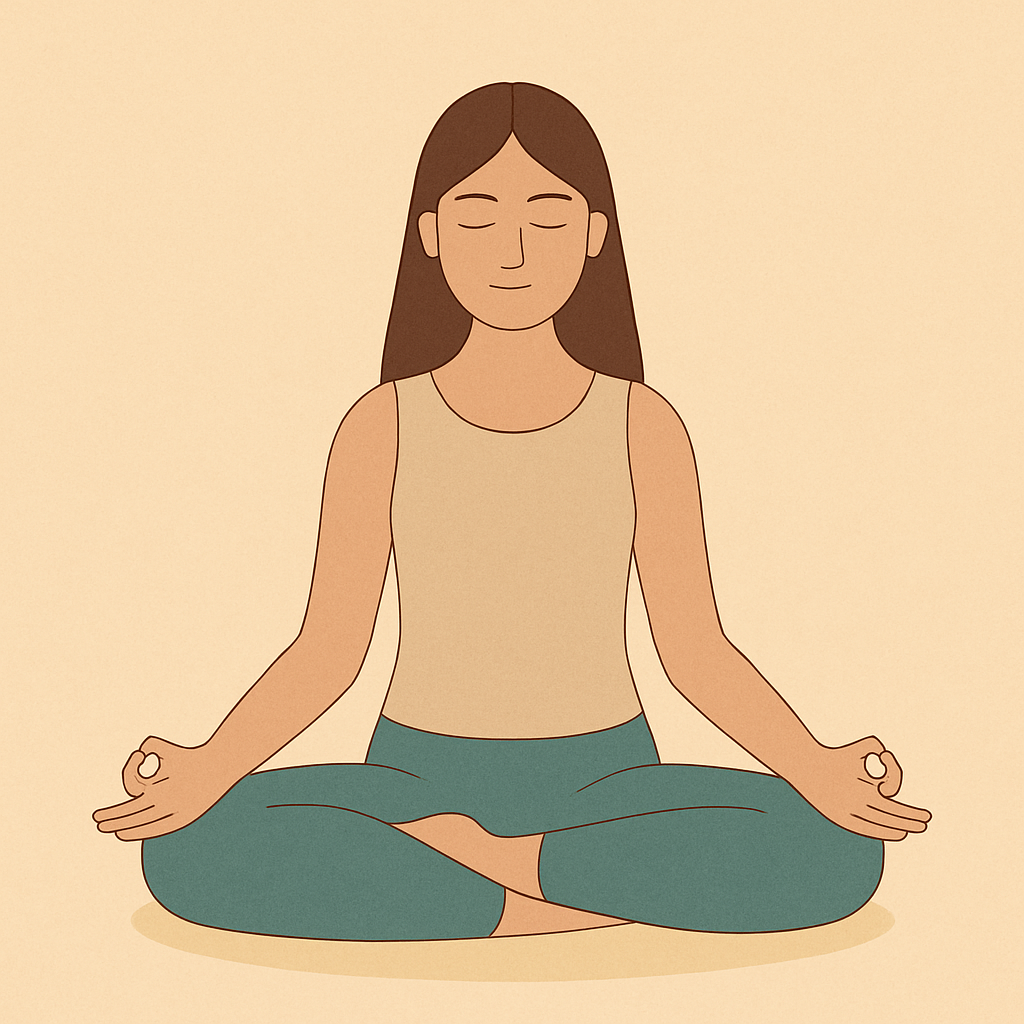
When we sit in meditation, we often seek silence and presence. Adding a mudra helps us enter a meditative state more easily, as it acts directly on the energetic and nervous systems — stabilizing the body and focusing the mind.
It’s not just an external gesture: a mudra is a bridge between body, breath, and intention.
✋ Which mudras to use in meditation?
Here are 3 particularly effective mudras to integrate into your practice:
1. Gyan Mudra
Most commonly used in meditation: combines thumb and forefinger. Helps calm thoughts and expand awareness.
2. Dhyana Mudra
Hands in lap, palms upward, right over left, thumbs touching. Promotes recollection and deep centering.
3. Shuni Mudra
Thumb and middle finger joined, other fingers extended. Brings discipline and stability, ideal for meditations requiring concentration.
🪷 How to integrate a mudra into your meditation.
- Sit comfortably in a stable position.
- Close your eyes and bring attention to your breath.
- Form the chosen mudra with one or both hands.
- Hold the gesture throughout the meditation (even just 5–10 minutes).
- Observe: how does your breath change? Does the mind become quieter?
You can also pair the mudra with a mental mantra (e.g., So-Ham, Shanti, Peace) to enhance its effect.
✨ When to use mudras in meditation?
- In the morning, to start your day with clarity.
- During a mindful pause, to restore calm.
- Before bedtime, to relax the nervous system.
- In moments of confusion or anxiety, to regain centeredness.
🌼 Conclusion
A simple gesture, if done with awareness, can become a doorway to inner silence. Mudras are not just aesthetics: they are ancient and profound tools that you can use anywhere to return to yourself, in breath, in stillness, in presence.
In the next article, we’ll explore mudras for the chakras, one for each energy center.