✨ What are mudras?
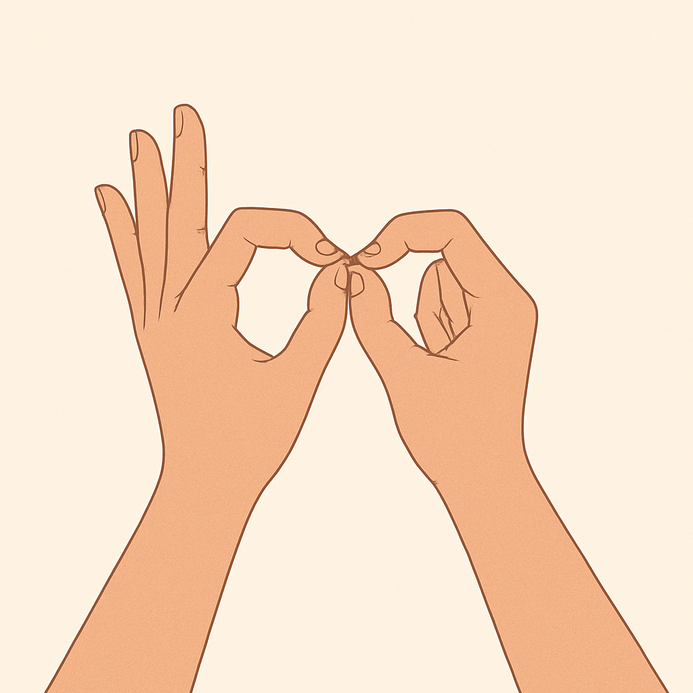
The term mudra comes from Sanskrit and means “seal” or “sacred gesture.” In the tradition of yoga and meditation, mudras are hand and finger positions that influence the flow of energy in the body and mind.
Just as postures (asanas) act on the physical body, mudras act on the subtle body — they guide prana (vital energy), support concentration, and help cultivate inner states of calm, clarity, and spiritual openness.
🌿 Origins and tradition
Mudras have their roots in the ancient texts of India, Vedic rituals and Tantric practices. They are also found in Buddhism and Ayurveda. They are often found depicted in Buddha statues or sacred paintings, with the hands in precise and meaningful poses.
Over time, they have been passed down as tools for healing, prayer, protection, concentration, and inner elevation.
✋ What are mudras for?
Each mudra has a specific energetic intention. Some help calm the mind, others stimulate vitality, grounding, clarity, or heart opening. Their main benefits include:
- increased focus during meditation,
- balance between body and mind,
- Support for chakra energy,
- relaxation of the nervous system,
- stimulation of specific organs or physiological functions.
Some practitioners use them during meditation, others in asana practice, or even throughout the day as a quiet ritual to return to the present moment.
🔄 Mudra and thin body.
The five elements (earth, water, fire, air, ether) are reflected in the fingers. When we join or position the fingers in certain ways, we activate a specific energetic response within our being.
For example:
- the thumb represents fire (energy, willpower),
- the index finger represents air (thought, inspiration),
- the middle finger represents ether (space, silence),
- the ring finger represents earth (grounding),
- the little finger represents water (fluidity, emotion).
Through mudras, these elements can be harmonized and balanced.
🌼 Conclusion
Mudras are simple yet profound gestures. They require no physical effort or equipment. Just attention, intention and listening. Even a few minutes a day can become a moment of inner reconnection.
In the next article, we’ll explore 5 simple mudras to practice and when to use them.