
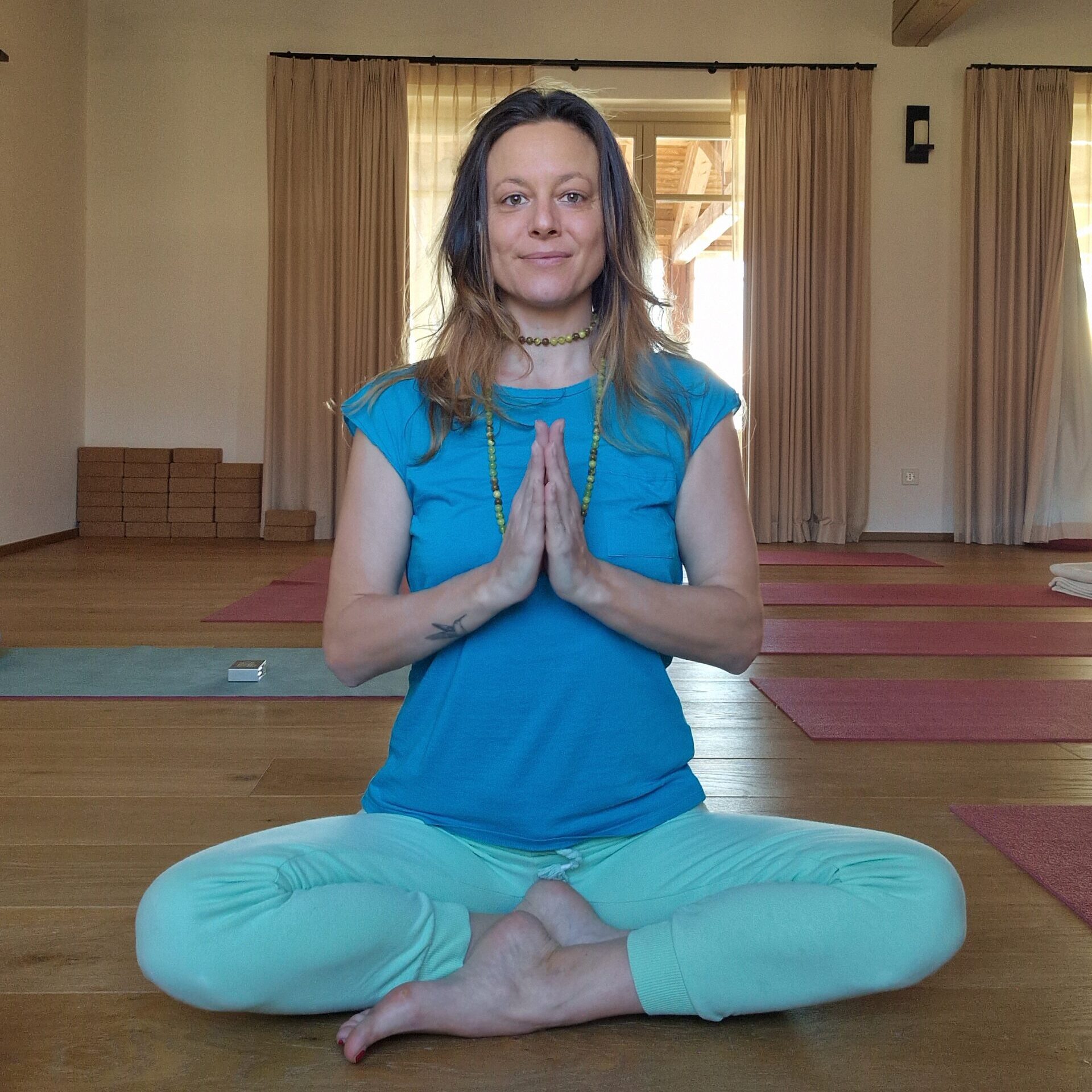
Quando si parla di yoga, spesso l’attenzione va subito alle posizioni.
In realtà, ciò che rende una pratica davvero trasformativa è qualcosa di molto più semplice: the breath.
Il respiro è il ponte tra corpo e mente, ed è ciò che guida ogni movimento nella pratica yoga.
The breath as a starting point
Nel yoga il respiro non serve solo a “ossigenare”.
Serve to:
- slow down
- create presence
- listen to your body's signals
- accompany the movement
Without conscious breathing, yoga becomes gymnastics.
When you breathe mindfully, you bring your attention to the sensation of your breath. This can involve noticing the rise and fall of your chest or abdomen, the feeling of air entering and leaving your nostrils, or the rhythm of your inhales and exhales.
Quando il respiro è fluido e naturale:
- the body relaxes
- the voltage decreases
- il movimento diventa più morbido
- the mind stabilizes
Non è necessario respirare in modo forzato o tecnico.
Often it is enough To notice how one breathes.
Breathing and nervous system
The way you breathe directly affects your nervous system.
A slow, deep breath:
- promotes a state of calm
- riduce l’attivazione costante
- aiuta a uscire dal “fare continuo”
This is why in yoga, the breath always comes before the pose.
How to bring breath into practice
Even in a short practice, you can:
- osservare il respiro all’inizio
- muoverti seguendo l’inspiro e l’espiro
- Stop when your breath shortens
- use breath as a signal to pause
Breath does not judge.
It informs you.
There is no right breath
Uno degli errori più comuni è cercare di respirare “nel modo corretto”.
In yoga:
- non c’è un respiro perfetto
- c’è un respiro adatto a questo momento
Ascoltarlo è più importante che controllarlo.
Una pratica che inizia dall’interno
When the breath guides the practice, the body stops pushing and starts collaborating.
È spesso lì che lo yoga cambia qualità:
meno sforzo, più presenza.